
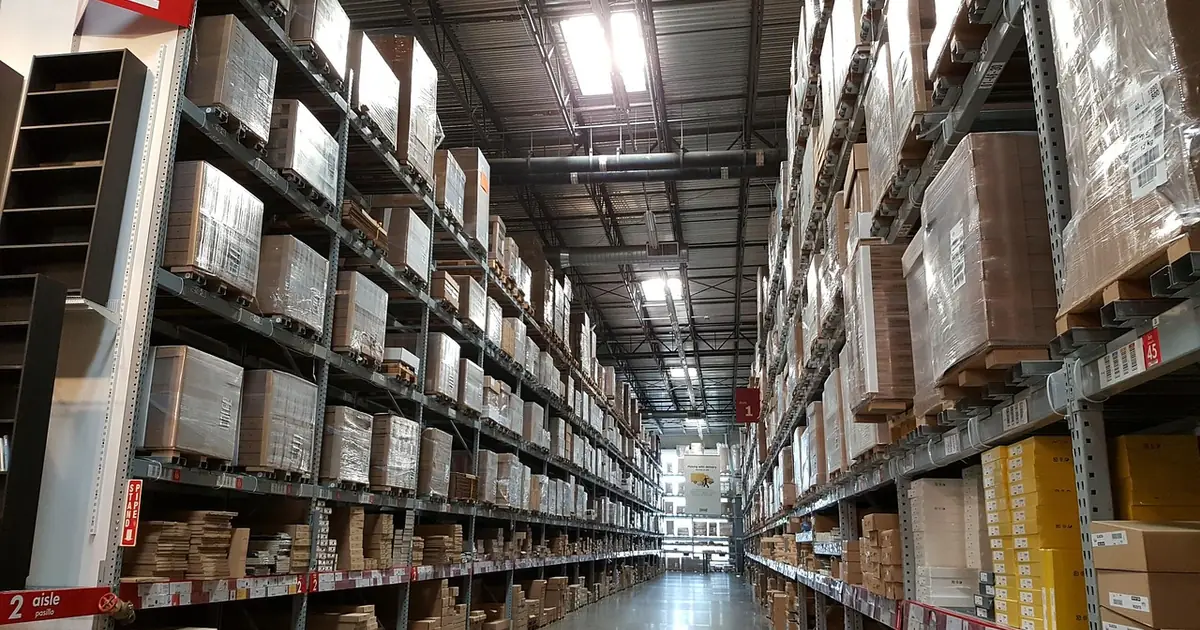
Aisle of a high-bay warehouse

Types of Bonded Warehouse: A, B, C, D, E and F

Warehouses are divided first into general and private, then into six types by responsibility and operation. Which one suits you?

Warehousing and Customs 3 min read

Warehouses are divided first into general and private: anyone can place goods in a general warehouse, while only the operator's own goods go into a private one. Beneath that distinction sit types A, B and F (general) and C, D and E (private).

The type determines under whose responsibility and under which rules your goods will be stored. That is why you should ask a warehouse operator for its type together with its code.

General warehouses: types A, B and F

General warehouses accept third parties' goods. The difference between them is where the responsibility lies.

General warehouse types
Type AThe operator is responsible and keeps the stock records. The most common type.
Type BResponsibility lies with the owner of the goods; the operator only provides the space.
Type FA warehouse operated by the customs administration itself.

Private warehouses: types C, D and E

Only the operator's own goods go into a private warehouse; the operator is also the owner of the goods.

Private warehouse types
Type CThe operator and the owner of the goods are the same person.
Type DSimilar to type C; a simplified procedure may apply on withdrawal.
Type EA private warehouse subject to authorisation where no storage-place requirement applies.

Which type suits you

If you are an importer having your own goods stored, a type A general warehouse is the most common and most practical solution: the operator is responsible, keeps the stock records, and you simply track your goods.

For firms importing continuously in large volumes that want to store at their own premises, a type C or D private warehouse comes into consideration; but for that you need to obtain your own warehouse authorisation.

Why the warehouse code is asked for

The warehouse code is a number issued by the Ministry of Trade that identifies each warehouse uniquely. It appears on the declaration.

Do not leave goods at an address whose code cannot be verified. When the code is requested together with the type, the status of the warehouse is confirmed as well.

Frequently Asked Questions

Questions About This Page

Which is the most common warehouse type?

Type A general warehouse. It accepts third parties' goods and responsibility lies with the operator; most importers work with this type.

Who carries the risk in a type B warehouse?

The owner of the goods. In type B the operator only provides the space; stock and responsibility belong to the owner. Clarify this difference before signing.

How do I find out the warehouse type?

By asking the operator for the warehouse opening and operating licence, the type and the code. Do not work with an operator who avoids sharing this information.

Who operates a type F warehouse?

The customs administration itself. Type F is also a general warehouse, so third parties' goods can be stored there; the difference is that the operator is the administration rather than a private company. Its service scope and working arrangements therefore follow the administration's rules, so ask in advance if you need handling or extra services.

Which companies are private warehouses (C, D, E) suitable for?

Only companies that store their own goods. In a private warehouse the owner of the goods and the warehouse operator are the same party, so third parties' goods cannot be accepted. If you do not have continuous, high-volume imports of your own, buying general warehouse services is usually more practical; assess the right type with your customs broker.

Can I move goods from one bonded warehouse to another?

Yes; with the customs administration's permission goods can be moved from one warehouse to another without the procedure being discharged. They stay under customs supervision throughout, so no import duty arises and a new entry is simply opened at the receiving warehouse. Before deciding, have your broker confirm the type of both warehouses and the customs office each reports to.

Can't find your question here? Warehouse Guide answers instantly on 23 topics — or write to us directly.

Do you need help with this?

Tell us about your cargo or your product requirement and we will talk through how what this article describes applies to your own case.