
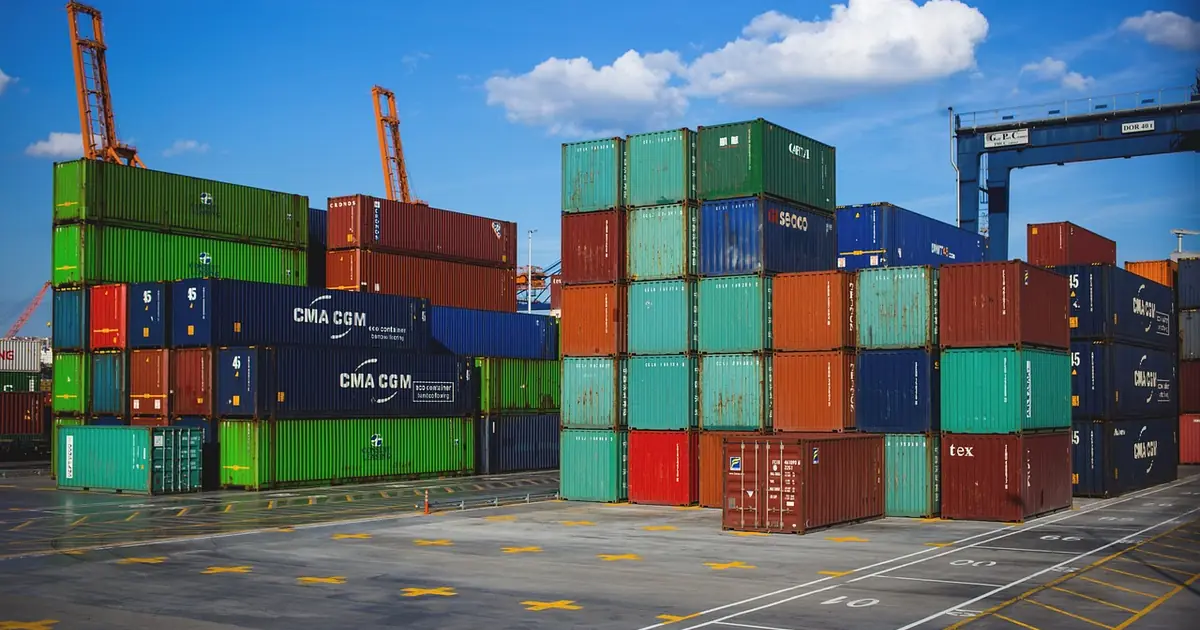
Aerial view of a port and industrial zone

What Is a Free Zone?

Free zones and bonded warehouses are often confused. Both defer duty, but one permits production.

Foreign Trade and Transit 3 min read

A free zone is an area that lies within the country's borders but is treated as outside the customs territory, with special incentives granted for commercial and industrial activity. In Türkiye free zones are governed by Law no. 3218.

The most important difference from a bonded warehouse is that production can be carried out in a free zone. A bonded warehouse is a storage procedure only.

What it provides

  • Because it is treated as outside the customs territory, import duties do not arise
  • Production, assembly and processing activities are permitted
  • Goods can wait without a time limit
  • Trade and storage within the zone are flexible

How it differs from a bonded warehouse

Free zone and bonded warehouse
Legal characterFree zone: a geographic area · Warehouse: a customs procedure
ProductionPossible in a free zone, not in a warehouse
Set-upA company is established in a free zone; in a warehouse you buy a service
Time limitAs a rule unlimited in both
Who it is forFree zone: producer/investor · Warehouse: importer/trader

Which suits you

If you are only going to hold the goods and then import them or send them to another country, a bonded warehouse is simpler, faster and cheaper: you do not have to set up a company, you buy the service.

If you are going to carry out production, assembly or processing, a free zone comes into consideration; but operating there involves company formation and a licensing process.

A common misconception

The idea that "a free zone is always more advantageous" is wrong. The advantage depends on the type of activity.

For an importer who only needs storage, the set-up cost of entering a free zone is far above the cost of buying a warehouse service.

Frequently Asked Questions

Questions About This Page

Can storage be done in a free zone?

It can. But for a storage need alone a free zone brings a set-up burden; a bonded warehouse is the more practical solution.

Are goods entering a free zone treated as imported?

They are not; the zone is regarded as outside the customs territory. Import formalities are carried out when the goods enter Türkiye.

Can goods be sent from a bonded warehouse to a free zone?

They can. The operation runs under the transit procedure; consult your customs broker for the detail.

Which one do I need if the goods will be processed into a different product?

Production and processing that change the nature of the goods require a free zone; what a bonded warehouse allows is limited to handling operations that keep the goods as they are. Packing, labelling and sorting can be carried out in the warehouse. Have your customs broker confirm which category your planned operation falls into before shipment.

Which is more cost-effective, a free zone or a bonded warehouse?

The comparison cannot be made on the storage tariff alone; a free zone also brings site allocation and operating costs, while a warehouse is costed on storage and handling items. Work out your volume, how long the goods will stay and how often you ship in a year. We then share that day's figures against those items.

Is there a limit on how long goods may stay in a free zone?

There is no single general period; the time is set by the legislation the zone is subject to and by the contract with the zone operator. In a bonded warehouse the goods may wait as long as the conditions of the procedure continue. If you are planning long-term stock, get the time terms of both options in writing and have your customs broker confirm them.

Can't find your question here? Warehouse Guide answers instantly on 23 topics — or write to us directly.

Do you need help with this?

Tell us about your cargo or your product requirement and we will talk through how what this article describes applies to your own case.