Listen to this page
0:005:10 left
GTİP stands for Gümrük Tarife İstatistik Pozisyonu, the customs tariff and statistical position: the 12-digit code under which every imported or exported item appears in the Turkish Customs Tariff Schedule. Goods are identified by this code in the customs declaration, and the duty rate, any additional customs duty, import checks, statistics and support schemes all depend on it.
That is why the GTİP is no formality. A wrong code means paying too little or too much duty, missing a required permit, or an additional assessment and a penalty in a post-clearance audit. The right code lets you see the real cost before you decide to buy.
How the 12 digits are read
According to the Turkish Ministry of Trade, the GTİP has four layers. The first six digits are the same everywhere in the world; the following digits add first the EU's and then Türkiye's own subdivisions.
| Digits 1–6 | Harmonized System (HS): the code shared by all World Customs Organization members |
|---|---|
| Digits 7–8 | Combined Nomenclature (CN): the EU's subdivision |
| Digits 9–10 | National position: opened for Türkiye's different tax treatments |
| Digits 11–12 | Statistical position: used for statistical classification |
The first two digits give the chapter and the first four the heading. Chapter 72, for example, is "iron and steel" and chapter 73 "articles of iron or steel". Because the code is international up to six digits, the HS code on a foreign supplier's invoice is usually a good guide to the first six; the last six you determine from the Turkish tariff.
GTİP examples for steel products
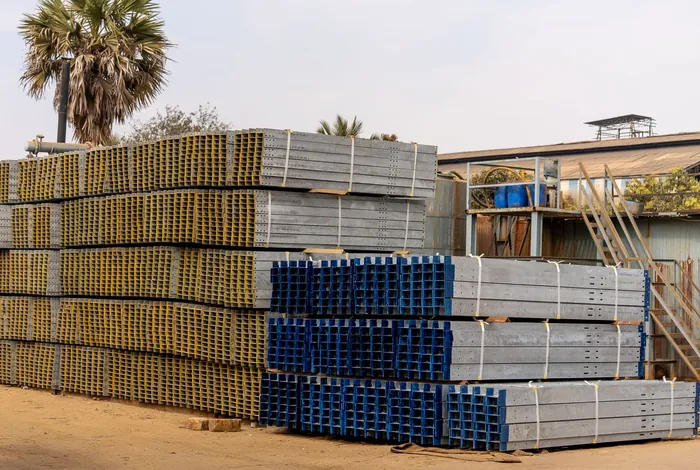
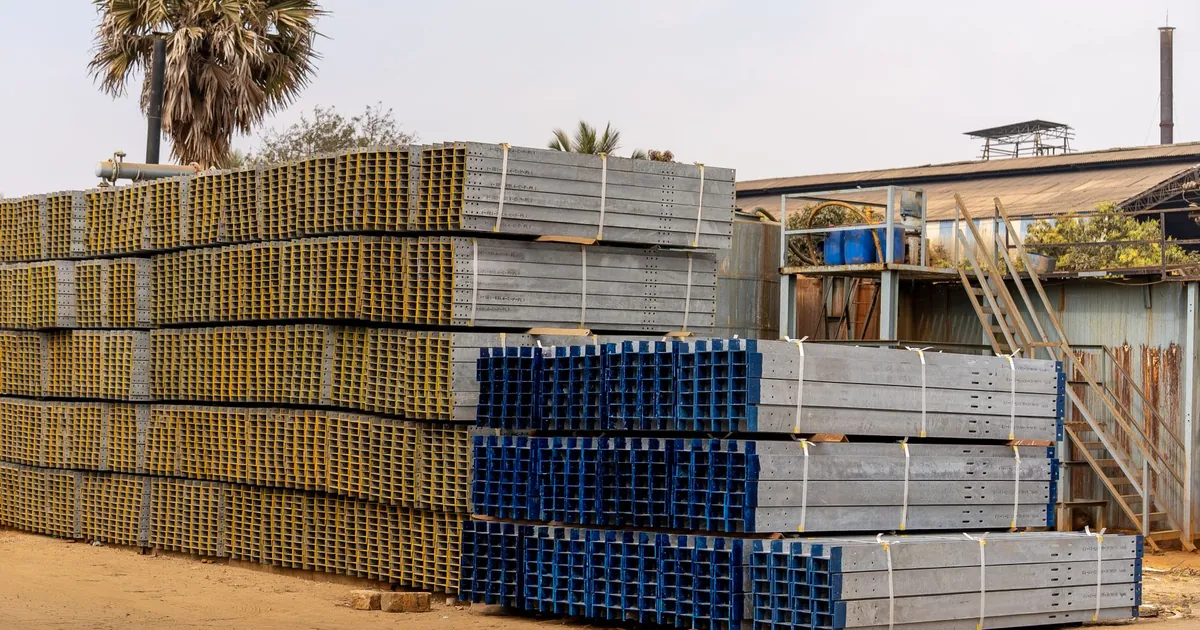
For steel, classification turns on the product form, width, thickness, rolling method, coating and alloy content; the same coil moves to a different heading once it is coated. The four-digit headings below show where products such as hot-rolled coil or galvanised sheet are found:
| 7207 | Semi-finished products of iron or non-alloy steel — billets |
|---|---|
| 7208 | Flat-rolled products, 600 mm wide or more, hot-rolled, not clad, plated or coated (HRC) |
| 7209 | Flat-rolled products, 600 mm wide or more, cold-rolled, not clad, plated or coated (CRC) |
| 7210 | Flat-rolled products, 600 mm wide or more, clad, plated or coated (galvanised, painted) |
| 7214 | Hot-rolled bars and rods — including ribbed reinforcing bar |
| 7216 | Angles, shapes and sections of iron or non-alloy steel (angle, U, I, H) |
| 7306 | Other tubes, pipes and hollow profiles — box sections, welded pipe |
The remaining eight digits split by thickness, width, type of coating and carbon content. As with reinforcing bar, two products that look almost identical can fall under different codes, so determine the code together with the technical documents (mill certificate, analysis report).
How to look up a GTİP
The reliable route to the right code is to work from the official tariff:
- On the website of the Ministry of Trade's Directorate General of Customs (ggm.ticaret.gov.tr), open the Turkish Customs Tariff Schedule in force chapter by chapter under "Mevzuat" (legislation).
- Find the chapter first, then the four-digit heading, and always read the section and chapter notes — most classification problems are solved there.
- Check the explanatory notes, the EU Combined Nomenclature notes and classification opinions; the Ministry's site lists these as reference sources too.
- Once you have the code, check the duty rate, any additional customs duty and the import controls attached to it separately.
Ready-made lists online and the code written by the supplier are only a starting point. Whoever declares the code also carries responsibility for it; if in doubt, decide together with your customs broker.
If you are unsure: binding tariff information
If it is disputed which code an item falls under, binding tariff information (BTB in Turkish, BTI in the EU) can be requested from the Ministry of Trade. It is an administrative decision, issued at the applicant's request, that fixes the place of the goods in the tariff schedule; applications are made through the BTB e-application system or in writing to the regional directorates of customs and foreign trade.
According to the Ministry, the decision is free of charge (costs such as chemical analysis or expert examination are borne by the applicant) and is valid for six years from the date of issue. For a product you import often and whose classification is open to interpretation, it fixes your duty calculation and prevents later disputes.
The GTİP of goods in a bonded warehouse
Goods entering a bonded warehouse are also identified in the declaration by their GTİP. The handling operations permitted in a warehouse must not change the code of the goods; an operation that does falls outside the warehousing procedure. That is why the effect on the code is assessed before work such as repacking.
When goods are withdrawn from the warehouse, duty is calculated at the rate in the tariff on that day. Knowing how import duty is calculated makes it easier to see in advance how the right GTİP affects your cost.